The Proprioception Advantage, Why Balance Training Matters More Than You Think in Singapore
Most people think balance training is only for older adults, rehab patients, or yoga enthusiasts. That idea misses a much bigger truth. In a fast-moving city like Singapore, balance and body awareness affect how you walk, turn, carry bags, climb stairs, and react to slips almost every day. This is one reason fitness classes singapore can be far more useful than people realise, because the right classes train your nervous system as much as your muscles.
If you have ever stepped onto a crowded MRT train, adjusted your footing on a wet floor at a food court, or caught yourself after a small misstep on a kerb, you have used proprioception. Proprioception is your body’s ability to sense where your limbs and joints are without needing to look at them. It is a quiet, constant system that makes movement feel smooth and safe.
What makes this topic especially relevant today is the way many of us live. You can be busy all day, hit your step target, and still move in a very repetitive way. Long periods at a desk, commuting, escalators, and fixed postures can leave the body underexposed to varied movement challenges. The result is not always weakness in the obvious sense. More often, it shows up as stiffness, clumsiness, slower reactions, or a feeling that your body is not responding as well as it should.
What Proprioception Actually Means in Real Life
Proprioception is often described as the body’s internal positioning system. That sounds technical, but the experience is simple. It is the reason you can walk through your home in dim light, reach for a handrail without staring at it, or shift your weight automatically when someone brushes past you in a queue.
Your muscles, tendons, joints, and connective tissue contain sensory receptors. These receptors send continuous feedback to the brain about pressure, angle, stretch, and position. The brain then uses that information to coordinate posture and movement in real time. This process is happening constantly, even when you are not aware of it.
When proprioception is working well, you tend to feel stable, connected, and coordinated. When it is undertrained, you may feel awkward in lunges, less confident on uneven surfaces, or surprisingly unsteady in movements that look simple.
That is why balance is not just about standing on one leg. It is a full-body communication skill.
Why Modern Routines Can Quietly Dull Body Awareness
Many adults in Singapore are active in a broad sense, but not always in a movement-rich sense. There is a difference between being busy and challenging the body in diverse ways.
A typical weekday can involve sitting for work, sitting during transport, standing in queues, and repeating similar motions. Even gym workouts can become repetitive if you always use the same machines in the same order with the same body positions. The body becomes efficient at what it repeats, but less adaptable when something unexpected happens.
This is why some people feel strong on machines but unstable during split squats, step-ups, or dynamic classes. It is not necessarily a sign that they are doing badly. It usually means the stabilising systems and movement awareness skills are being challenged in a new way.
The good news is that proprioception responds well to training. It can improve at almost any age when the body is exposed to movement that requires control, adaptation, and attention.
Why Balance Training Is Not Just for Seniors
The benefits of proprioception training change depending on your age and lifestyle, but they matter across the board.
For younger adults who play sport, better body awareness supports landing mechanics, direction changes, and ankle stability. For office workers, it improves posture control and makes movement feel less stiff after long periods of sitting. For parents, it helps with quick reactive movement while carrying children or bags. For older adults, it supports walking confidence, fall prevention, and independence.
What all these groups have in common is this, life rarely challenges balance when you are standing perfectly still on a flat surface with no distractions. Real-life balance is dynamic. You are turning, reaching, stepping, reacting, and doing all of that while tired, rushed, or mentally occupied.
That is why classes that improve movement quality have such practical value.
How Different Class Types Train Proprioception Without Calling It That
Many people improve proprioception without ever hearing the word. They simply notice that they feel more coordinated, more stable, or less clumsy after a few months of consistent classes.
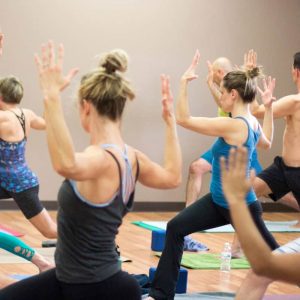
Yoga and Pilates are among the best-known formats for this because they slow things down enough for you to feel alignment and control. A single-leg balance pose or a controlled transition on a mat requires dozens of small corrections. You are not only building strength. You are teaching your brain to process movement feedback more accurately.
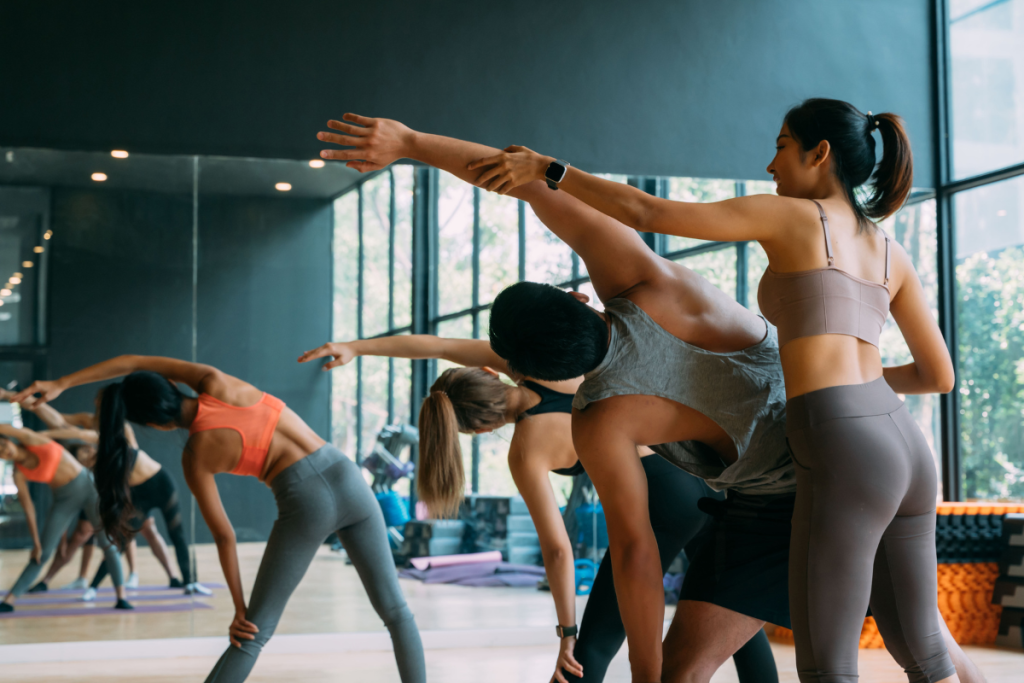
Dance-based classes challenge proprioception in a different way. Here, the body has to coordinate rhythm, direction, timing, and spatial awareness. If you have ever felt lost in choreography, that does not mean the class is not for you. It often means your brain and body are doing high-value learning work. Over time, this can sharpen reaction time and movement confidence outside the studio too.
Combat-inspired formats and athletic interval classes also help because they demand quick weight transfer, rotational control, and stable positions under speed. These movements train you to stay balanced while in motion, which is much closer to how balance is tested in daily life.
Strength training classes can be excellent as well, especially when technique is emphasised. Controlled reps, unilateral work, and proper joint positioning all reinforce movement awareness. Even machine-based exercises can support proprioception when done with intention rather than simply moving the weight from point A to point B.
A person who wants to improve this skill does not need a “balance class” specifically. What they need is a thoughtful mix of movement demands.
The Singapore Context, Why This Skill Has Daily Payoff
Singapore’s urban environment is efficient and highly walkable, but it also presents constant micro-challenges to balance. Rain can make surfaces slick. Crowds create unpredictable movement around you. Escalators and stairways require quick foot placement. Kerbs and pavement edges demand attention, especially when you are tired at the end of the day.
Good proprioception does not mean you will never slip or stumble. It means your body is more likely to react quickly enough to recover. That difference matters more than people think.
It also matters in the gym itself. Members who improve body awareness often find that other goals become easier to pursue. Their squat pattern improves. Their lunges feel less shaky. Their cardio classes feel smoother because they waste less energy on poor positioning. Their confidence grows because movement starts to feel reliable again.
Later in your routine, when you want a broader mix of formats, True Fitness Singapore offers a class ecosystem that can support this kind of progression across strength, mind-body, and cardio formats instead of locking you into a single training style.
How to Start Training Proprioception Without Overcomplicating It
The biggest mistake people make is assuming they need advanced drills or unstable gadgets. They do not. The most effective way to build proprioception is to practise varied, controlled movement consistently.
Start by adding one class per week that emphasises control and alignment, such as yoga or Pilates. Pair that with one dynamic class that requires movement transitions, rhythm, or agility. If you already do strength work, slow down a few sets and pay attention to foot pressure, posture, and joint alignment rather than rushing through reps.
The goal is not to perform perfect balance. The goal is to improve your body’s ability to sense and adjust.
You may not notice the change immediately in the mirror, but you will feel it in the way you move through your day. You may catch yourself recovering faster from a misstep. You may feel steadier on stairs. You may stop dreading movements that once felt awkward.
That is progress, and it is one of the most useful forms of fitness you can build.
FAQ
Q: I am in my 30s and already active. Do I still need to train balance?
A: Yes. Balance and proprioception support sports performance, joint control, and injury prevention at any age. If you run, play court sports, or lift weights, better body awareness can improve movement efficiency and reduce the risk of repeated strains or sprains.
Q: Can proprioception training help with recurring ankle sprains?
A: It can often help as part of a smart recovery and prevention plan. Recurrent ankle sprains are commonly linked to reduced ankle stability and impaired body awareness. Training single-leg control, balance, and strength can improve movement quality, but persistent pain or instability should still be assessed by a qualified professional.
Q: Which classes are best for improving proprioception?
A: Yoga, Pilates, dance-based classes, combat-inspired classes, and well-coached strength sessions can all help. The best choice depends on what you enjoy and can do consistently. A combination of slow control and dynamic movement usually works very well.
Q: Why do I feel shaky in lunges even though I can lift heavy on machines?
A: That is very common. Machines provide external stability, while lunges require your body to create its own stability through the feet, hips, core, and nervous system. The shakiness often means your stabilisers and proprioceptive system are being challenged, not that you are failing.
Q: How long does it take to notice improvement?
A: Some people notice small changes in coordination and confidence within a few weeks, especially if they train consistently two to three times per week. Bigger improvements in movement control usually build over a few months.
Q: Is proprioception the same thing as balance?
A: Not exactly. Proprioception is one major part of balance. Balance also depends on vision, inner ear function, strength, and reaction timing. Proprioception is the internal body-awareness input that helps your brain make quick corrections.